Blog Archives
exploring sshd-keygen-wrapper on Mac
The sshd-keygen-wrapper tool, located within macOS Privacy settings, has garnered attention from users, particularly when they discover it in the Full Disk Access section of their Privacy preferences. While its presence might be disconcerting to some, a deeper understanding of its purpose and functionality can dispel any concerns.
The inclusion of sshd-keygen-wrapper in the Full Disk Access section can be perplexing. Some users may interpret it as an indication of a security compromise or malware. However, the reality is that sshd-keygen-wrapper is an integral component of macOS, functioning as an SSH secure shell key generator. Its primary role is to facilitate users in enabling or disabling remote access to their Mac via the Secure Shell Protocol (SSH).
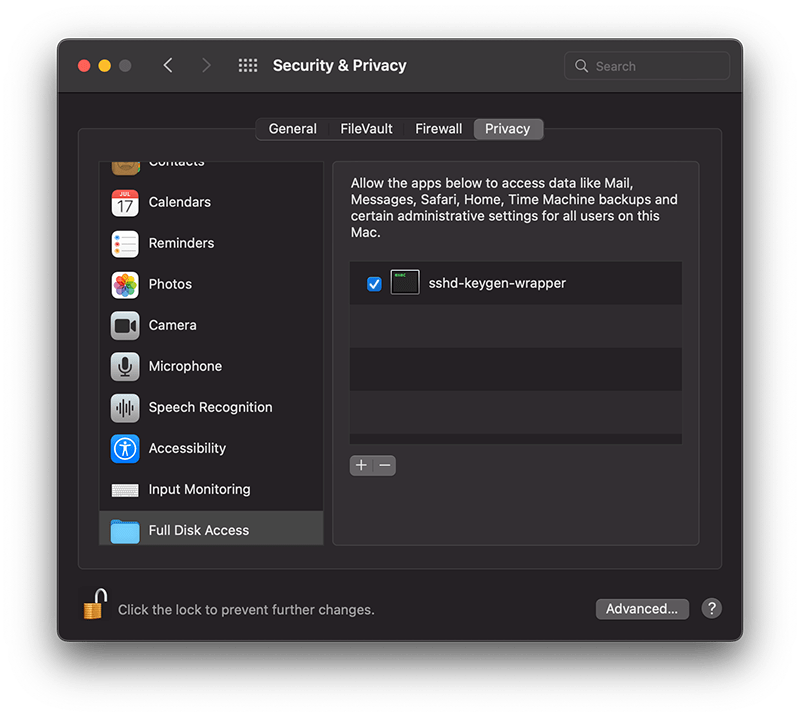
The visibility of sshd-keygen-wrapper in Full Disk Access correlates with the Remote Login setting. Users who have never activated Remote Login will not encounter this tool. But for those who have, the tool will be present, albeit disabled by default, indicating that its access and permissions are inactive.
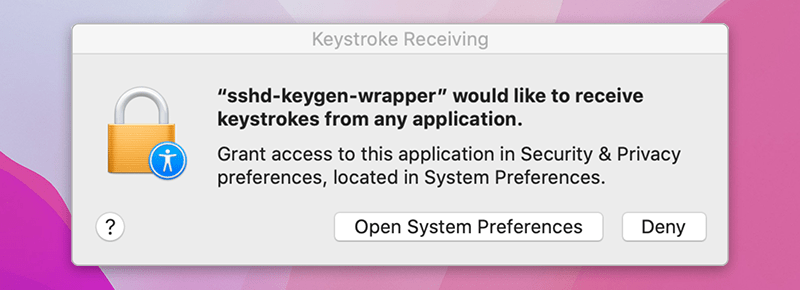
While navigating the Privacy settings on a Mac, users might come across a popup message stating, “‘sshd-keygen-wrapper’ would like to receive keystrokes from any application.” This message can be particularly perplexing, leading to concerns about the tool’s intentions and whether it poses any security risks.
Is it malware?
A prevalent misconception is associating sshd-keygen-wrapper with malware or unwanted software. Contrary to this belief, the tool is an authentic part of macOS and poses no malicious intent. Its placement in the Full Disk Access section is inherently tied to the SSH remote access feature. Activating SSH remote access from System Preferences ensures the association of sshd-keygen-wrapper, which then guarantees the generation of secure SSH shell keys for remote connections.
Should sshd-keygen-wrapper be granted Full Disk Access?
A frequently posed question revolves around whether sshd-keygen-wrapper should receive full disk access. Users contemplating remote access to their Mac via SSH might consider this option. By granting Full Disk Access to sshd-keygen-wrapper, macOS inherently extends the same privilege to SSH. As a result, any individual accessing the Mac through SSH can access all data, encompassing emails, messages, and files. The choice to activate this feature should stem from individual security assessments and requirements.
DuckDuckGo Privacy Extension not so private

DuckDuckGo recently made changes to their browser extension which turns it into an adblocker and privacy advocate, stalling websites that would like to track you and sell your behaviour to the nearest (not necessarily highest) bidder.
It sounds great, until you install the extension and realise you’re trading one privacy exposure for another. As the picture above makes clear, you’re allowing the extension to read everything you post on a website, including your passwords. To be fair, this is not uncommon with adblockers, but it is also not necessary; 1Blocker and Better adblocker, for a couple of examples, do it properly:

I don’t know who’s really behind DuckDuckGo or what they really do with the data they can see from my web browsing. I know no more about them than I know about those behind all the adtrackers and other spyware that the DuckDuckGo extension is trying to block (while being able to read my passwords and potentially track my browsing habits).
DuckDuckGo may have a good reputation, but there’s a whiff of the hypocritical in a tool that promises to protect you from spying that can itself potentially spy on you.
Sorry, but that’s not the kind of tool I need to protect my privacy. I immediately uninstalled it.



 applehelpwriter.com